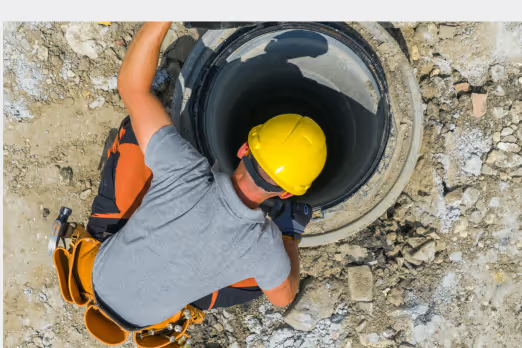

Sewer systems are a critical part of urban infrastructure, ensuring safe and efficient waste management. However, maintaining these networks poses a significant challenge, particularly with aging infrastructure and expanding urban areas. Enter artificial intelligence (AI), a powerful tool revolutionizing how sewer asset management is conducted.
How AI Enhances Sewer Inspection and Monitoring
AI-powered tools have begun to change the way sewer systems are inspected and monitored. By leveraging advanced machine learning algorithms, sewer asset management teams can identify problems before they escalate.
- Predictive maintenance – AI can predict when parts of the sewer system are likely to fail, allowing for proactive interventions.
- Real-time monitoring – Sensors and IoT devices integrated with AI enable continuous monitoring of sewer conditions, alerting teams immediately to any anomalies.
- Automated defect detection – AI systems can analyze CCTV footage and other data to automatically identify defects such as cracks, blockages, or pipe degradation.
VAPAR’s AI-Driven Inspection for United Utilities is a good sample case study. United Utilities, one of the largest water companies in the UK, adopted VAPAR’s AI-powered platform to streamline and enhance its sewer inspection process. Traditionally, manual inspections required workers to review hours of CCTV footage, often leading to human error or missed issues. By integrating

VAPAR’s AI-powered platform, VAPAR.Solutions, United Utilities automated the defect detection process, allowing for more accurate identification of cracks, blockages, and other pipe degradations in real time.
This approach not only improved efficiency but also allowed United Utilities to save on costs, reduce downtime, and extend the lifespan of its sewer infrastructure by transitioning from a reactive to a proactive maintenance strategy.
For more details on how VAPAR's AI has transformed sewer inspections at United Utilities, you can explore their success story on the VAPAR website here.
A great example of AI-powered real-time monitoring is for overflow prevention in stormwater and sewer networks. StormHarvester partnered with Wessex Water to implement an AI-powered real-time monitoring and predictive analytics system aimed at optimizing stormwater and sewer network management. The results of the initial project detected over 60 early blockage formations in real time, at least 2 of which would have caused significant pollution incidents (CAT 3 or worse) if it was not for the real-time AI-driven alerts.
To learn more about StormHarvester’s work with Wessex Water, you can read the full case study on StormHarvester’s website here.
Data-Driven Decision Making for Proactive Maintenance
With AI, the data collected from inspections and monitoring can be used to make smarter, data-driven decisions. This shift from reactive to proactive maintenance extends the lifespan of assets and reduces costs.
- Historical data analysis: AI systems use past inspection reports and maintenance records to identify trends and predict future issues.
- Risk-based prioritization: By analyzing data, AI can rank areas in terms of risk and urgency, ensuring that resources are deployed to the most critical issues first.
- Cost efficiency: AI-driven insights help minimize unnecessary interventions, reducing labor and material costs.
A good sample of Case study relevant to Data-Driven Decision Making for Proactive Maintenance is with Knox City Council. In this project, VAPAR's platform was utilized by Veolia as part of a $1.2B asset management plan. The AI-driven system allowed for efficient inspections and assessments of over 65600 feet of stormwater assets.
Key outcomes of this project included:
- Rapid reporting and data management – Nearly 900 inspections were uploaded and reviewed within an average of 2.8 days, with over 3,400 defects reported.
- Risk-based prioritization – Assets were graded, and 179 assets were identified as having high structural priority (Grade 4+). This data enabled Knox City Council to make proactive maintenance decisions, allocating 260 assets into repair plans.
- Cost efficiency – By using VAPAR's insights, the council was able to prioritize and address the most critical issues, optimizing repair plans and reducing future emergency repairs.
This case study is a great example of how AI can help shift from reactive to proactive asset management. You can read the full details of this case study on the VAPAR website here.
Challenges in AI Integration for Sewer Networks
While AI offers numerous benefits, integrating it into existing sewer management practices can present challenges.
- Data quality and availability – High-quality, consistent data is essential for effective AI implementation. Legacy systems may lack sufficient data, or data might be incomplete.
- Cost of implementation – The upfront cost of installing AI systems and integrating them with existing infrastructure can be high, particularly for smaller municipalities.
- Training and expertise – Teams must be trained to work with AI systems, which may require significant time and investment. That said, the right tool should be easy to implement and not create additional work for operations teams.
Partnerships with AI vendors, phased rollouts, and investment in training can mitigate these challenges. Many cities have turned to pilot programs to gradually integrate AI, reducing the risk and cost of full-scale implementation.
Conclusion
The integration of AI in sewer asset management offers a promising solution to the challenges faced by aging infrastructure and increasing urbanization. By adopting AI, cities can not only improve the efficiency and accuracy of inspections but also shift to a more proactive, cost-effective approach to maintenance.
While there are challenges to implementing AI, the benefits—ranging from cost savings to improved service delivery—make it an essential technology for future sewer management strategies.
Articles
.jpg)