
Municipalities and utilities are under growing pressure to stretch infrastructure budgets while maintaining reliable sewer services. One of the most effective ways to achieve this is by shifting from reactive repairs to proactive sewer pipe maintenance. Not only does this strategy prevent costly emergency fixes, but it also extends the life of assets and improves service outcomes. Here’s how a proactive approach can deliver long-term financial and operational benefits.
The Hidden Costs of Reactive Maintenance
Relying on reactive maintenance responding only after sewer systems fail can appear cost effective in the short-term. However, this approach often leads to significant and compounding hidden costs. Emergency repairs typically incur higher labour, and equipment costs due to the urgency and unpredictability of the work. Crews may need to be dispatched after hours, leading to overtime premiums, and short-term fixes may not address the root cause, increasing the likelihood of repeated failures.
Beyond the direct financial burden, there are wider social and environmental impacts:
- Traffic disruptions: Emergency sewer repairs often require road closures with little or no notice, causing delays and public frustration.
- Environmental damage: Overflows and leaks can pollute waterways, leading to fines, cleanup costs, and ecological harm.
- Reputational harm: Service interruptions and visible infrastructure failures can erode public trust in utilities and local governments.
- Regulatory penalties: In jurisdictions with environmental performance targets, repeated overflows can result in formal notices or fines.
Real-World Example: Major Sewage Spill in Fremantle, Perth (June 2025) In June 2025, a burst sewer main on Hamilton Road in Spearwood, near the Beaconsfield area of Fremantle in Western Australia, resulted in a major raw sewage spill. Untreated wastewater flooded local streets, parks, and soccer fields, and even reached the Fremantle Fishing Boat Harbour and the Swan River. The Water Corporation quickly issued public health advisories, warning residents against fishing and water-based activities in the affected zones.
Cleanup efforts proved to be both complex and costly, involving prefabricated pipe sections and broad public communication to manage the health risks and environmental fallout. The event triggered widespread community frustration, with residents describing the stench as “like a toilet,” prompting authorities to cordon off multiple public areas, including parks. This incident highlights the substantial financial, social, and environmental costs associated with reactive sewer maintenance.
Benefits of a Preventative Maintenance Strategy
Proactive maintenance includes regular inspections, condition assessments, and timely rehabilitation. By identifying early signs of wear or damage like cracks, root intrusions, or sediment buildup, utilities can schedule planned interventions before they escalate. This results in:
- Reduced emergency repair costs
- Fewer service disruptions
- Extended asset life
- Better allocation of maintenance budgets
Leveraging Technology to Drive Efficiency
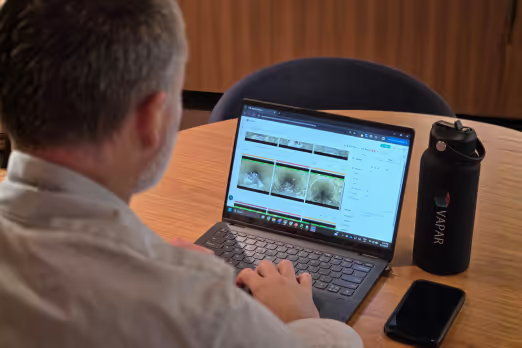
Advances in technology, such as AI-powered defect detection and cloud-based asset management platforms, have made proactive maintenance more accessible and data-driven. Utilities can now automate CCTV video reviews, prioritise repairs based on risk, and track performance over time. This allows teams to focus resources where they matter most and make defensible, budget-conscious decisions.
A notable example of this is a case study involving United Utilities. In 2023, United Utilities, which manages approximately 77,000 km of sewer pipes in the northwest of England, partnered with VAPAR to enhance its CCTV inspection process using AI technology. Traditionally, reviewing sewer inspection footage was a manual and time-consuming task, relying on engineers to identify and grade defects. Through VAPAR’s AI-powered platform, United Utilities was able to automate defect detection, generate standardised condition assessments, and prioritise repairs based on severity and risk.
The cloud-based system enabled faster, more consistent analysis and helped the utility make data-driven decisions on asset maintenance. This collaboration not only improved operational efficiency but also supported United Utilities in meeting regulatory targets to reduce blockages, flooding, and pollution incidents. Following the success of the pilot, the technology was adopted more broadly across the organisation.
Building a Data-Informed Maintenance Program
A successful proactive sewer maintenance strategy hinges on data, both its quality and how it’s used. Building a data-informed program allows utilities to move beyond guesswork and respond to actual risk and performance indicators. This approach helps prioritise maintenance activities, allocate resources more efficiently, and extend the life of assets.
- Conduct a Baseline Condition Assessment
The first step is to establish a clear picture of the existing sewer network. Utilities should carry out a network-wide (or cohort based) baseline inspection using CCTV footage, condition grading, and structural analysis. This step identifies areas of concern, provides a reference point for future comparisons, and uncovers sections that may be at risk of failure but haven’t yet shown visible signs.
- Centralise Asset and Inspection Data
Utilities often store asset data across multiple systems or in disconnected formats. A centralised digital platform such as an asset management system consolidates inspection histories, pipe attributes (e.g. diameter, material, installation date), defect trends, and repair records. With this unified view, engineers and decision-makers can identify patterns, spot recurring issues, and support evidence-based planning.
- Define Risk-Based Intervention Thresholds
Instead of treating all pipes equally, utilities should define thresholds based on risk profiles. This includes considering factors such as structural condition, likelihood of failure, consequence of failure (e.g. proximity to schools or hospitals), and historical performance. Using a weighted scoring system or risk matrix allows maintenance to be prioritised based on impact and urgency.
- Schedule Recurring, Targeted Inspections
Rather than adopting a one-size-fits-all timeline, inspection intervals should reflect the characteristics of each pipe segment. For example, older pipes made from vulnerable materials (like vitreous clay or asbestos cement) in high-consequence areas may require more frequent monitoring, while newer, low-risk segments can be inspected less often. This targeted approach maximises efficiency and minimises unnecessary inspection costs.
- Monitor, Refine, and Continuously Improve
A data-informed program is not static, it evolves as new information is captured. Utilities should continuously monitor inspection outcomes, maintenance effectiveness, and failure rates. By incorporating this feedback into the asset strategy, they can adjust inspection frequencies, update risk thresholds, and improve forecasting models. Over time, this fosters a culture of continuous improvement, where decisions are guided by current data rather than legacy assumptions.
Conclusion
Investing in proactive sewer pipe maintenance is not just about preventing today’s problems, it's about securing tomorrow’s budgets. By avoiding costly surprises and extending the life of assets, utilities can deliver more value to ratepayers and operate with greater confidence. The message is clear: the earlier you act, the more you save.
Articles
.jpg)