
Wastewater is often out of sight, but it plays a central role in urban life and public health. As cities grow and infrastructure ages, councils, engineers, and asset managers face increasing pressure to maintain effective wastewater systems. Understanding where wastewater comes from, the problems it presents, and the tools available to manage it is essential for sustainable and cost-effective infrastructure planning.
Defining Wastewater: What Is It and Where Does It Come From?
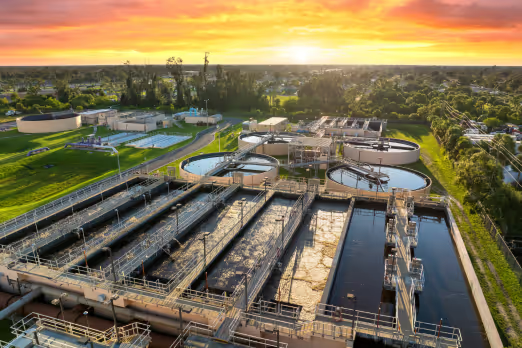
Wastewater is used water that is no longer clean enough to be reused without treatment. It comes from a variety of sources—residential areas (such as bathrooms, kitchens, and laundries), commercial buildings, industrial processes, and stormwater runoff. These flows are collected through a network of pipes and conveyed to treatment plants, where contaminants are removed before the water is safely discharged or reused.
In many older cities, combined sewer systems handle both sewage and stormwater in the same pipes, which can cause overflow during heavy rain. Newer systems tend to separate these flows, but all types of infrastructure face the challenge of keeping up with population growth and urban sprawl.

Key Challenges in Managing Wastewater Infrastructure
Wastewater infrastructure is often decades old and operating beyond its intended capacity. Many systems were built with design lives of 50–100 years, but limited reinvestment and growing urban populations have pushed these networks to their limits. For councils and utilities, a major challenge lies in prioritising repairs and renewals within constrained budgets. Decisions must be made about which assets to replace, rehabilitate, or monitor—often with incomplete data.
System failures such as pipe collapses, blockages, and sewer overflows not only disrupt essential services but also carry significant environmental, public health, and reputational risks. These events are costly to resolve and often require emergency responses that draw resources away from planned maintenance programs.
Another persistent issue is inflow and infiltration (I&I). This occurs when groundwater or stormwater enters the sewer network through cracks, leaky joints, or illegal connections. While the added flow may not carry contaminants, it burdens treatment plants, increases pumping costs, and reduces overall system capacity—particularly during wet weather events.
A good example of a council that experienced inflow and infiltration is Ballina Shire Council in coastal New South Wales, which was dealing with significant I&I—primarily caused by seawater entering its aging sewer network. This led to increased volumes within the system and higher treatment costs.
VAPAR partnered with the council to conduct AI-powered CCTV inspections, which quickly identified defect locations contributing to the infiltration. These insights enabled targeted rehabilitation of the most affected sections.
As a result, the council achieved a reduction in infiltration, lowered treatment costs, and improved the long-term resilience of its wastewater infrastructure.
The Role of Councils and Engineers in Wastewater Oversight
Councils and water utilities play a frontline role in managing wastewater systems. Their responsibilities include setting infrastructure priorities, approving capital works, responding to system failures, and ensuring compliance with environmental regulations. Engineers are key to diagnosing problems and recommending sustainable design and maintenance solutions.
For asset managers, wastewater systems represent a long-term investment. Maintaining these assets requires a mix of short-term operational work—such as clearing blockages and performing CCTV inspections—and strategic capital planning to rehabilitate or replace ageing pipelines. Increasingly, there's a push to move from reactive maintenance to data-informed, proactive management.
Emerging Solutions: Modernising Wastewater Management
Fortunately, new technologies are reshaping how wastewater is monitored and managed. AI-powered platforms are now able to analyse CCTV footage from pipe inspections, identifying defects faster and more consistently than manual methods. This speeds up the decision-making process and ensures that high-risk pipes are prioritised for rehabilitation.
In addition to AI, several digital tools are improving how councils and engineers interact with underground infrastructure:
- Digital twins: Provide a virtual representation of physical assets, allowing for scenario modelling and performance forecasting.
- GIS mapping: Enables spatial visualisation of network assets, defects, and work history for better planning.
- Cloud-based software platforms: Centralise inspection, maintenance, and condition data in one accessible location.
- Integrated dashboards: Allow users to view asset condition, inspection schedules, and rehabilitation status in real time.
These innovations reduce uncertainty, improve cross-team communication, and support more efficient coordination with external contractors. Ultimately, they help councils move from reactive maintenance to proactive asset management.
Conclusion: Making Wastewater a Strategic Priority
Wastewater may seem like a background service, but it's critical to the health, safety, and functionality of our cities. By recognising the origins of wastewater and the challenges it presents, councils and engineering teams can make smarter, longer-term decisions about how infrastructure is managed.
Modern wastewater management is no longer just about fixing what's broken. It's about anticipating what’s next—using technology, data, and cross-functional collaboration to create resilient systems that protect both people and the environment.
Articles
.jpg)