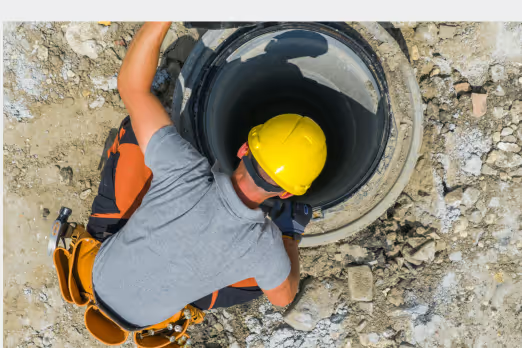

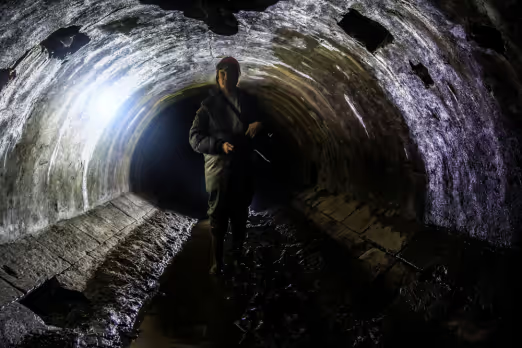
Every time we flush a toilet or let water drain from our sinks, we rely on an underground network of pipes and systems. Sewer workers ensure that this system runs smoothly, safely, and hygienically.
These professionals are responsible for maintaining the infrastructure that prevents wastewater from flooding our streets, contaminating our water, or damaging our environment. While their work often goes unnoticed, their impact is everywhere.
What Sewer Workers Really Do
Sewer work is not just physically demanding—it’s technically complex and critical to urban health. The role involves:
- Inspecting pipelines using CCTV cameras and specialized robotics
- Clearing blockages like grease, wipes, and invasive tree roots
- Repairing broken pipes to prevent leaks and collapses
- Responding to emergencies such as overflows during heavy rain
- Maintaining pumping stations and other key infrastructure
This work often takes place in confined spaces, in all weather conditions, and sometimes around hazardous materials. It’s not glamorous—but it’s essential.

Sewer Work Isn’t Easy—Here’s Why It Matters
Imagine a day without a working sewer system. Streets could flood with wastewater, drinking water could be compromised, and public health could quickly deteriorate.
Sewer workers form the backbone of urban sanitation, preventing the spread of disease and ensuring environmental compliance. Their efforts are vital for:
- Public health and hygiene
- Flood prevention and climate resilience
- Safe roads and infrastructure integrity
- Environmental protection
Without them, modern city life would come to a messy halt.
How Technology Is Transforming Sewer Maintenance
The world of sewer maintenance is evolving. Thanks to new technology, the job is becoming safer, more efficient, and more data driven.
- AI-powered tools are automating pipe defect detection
- Drones and robotic crawlers are replacing manual inspections in many cases
- Cloud-based platforms allow real-time condition assessment and predictive maintenance
- GIS mapping and digital twins are improving infrastructure planning
These innovations are not replacing sewer workers—they’re empowering them. Today’s sewer professionals are blending traditional skills with cutting-edge tech to make smarter decisions and prevent problems before they occur.
A great example is with Northumbrian Water in the United Kingdom. Tasked with serving over 2.7 million customers, Northumbrian Water faced mounting challenges with sewer blockages and flooding events. By partnering with VAPAR, they introduced AI technology that automated the analysis of CCTV footage, allowing defects and blockages to be identified much faster. This shift enabled sewer workers to access accurate data quickly, prioritize maintenance activities, and drastically reduce the time and risk involved in inspections. Rather than replacing workers, the AI system freed up crews from repetitive tasks and helped them focus on critical, high-value interventions—making their work not only easier but safer and more effective.
Conclusion
Sewer workers have always been on the frontlines of public health and urban resilience. Their work keeps cities functioning, even when no one is watching. As cities grow and infrastructure ages, the demands on these workers are only increasing. That’s where innovation plays a crucial role.
By equipping teams with AI-powered tools like VAPAR, we’re not replacing the expertise of sewer professionals—we’re enhancing it. Faster insights, safer working conditions, and smarter decisions mean these underground heroes can focus on what they do best: keeping our communities clean, safe, and running smoothly.
Articles
.jpg)