
What is useful life?
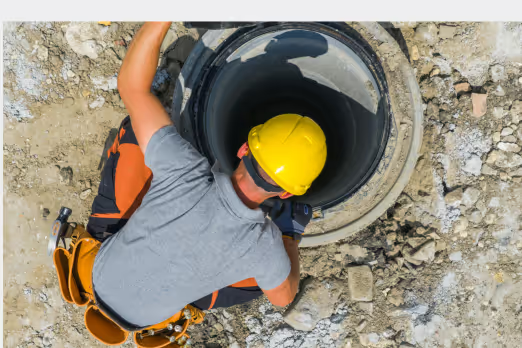
Asset useful life refers to the length of time an asset can stay in service. There are several factors that impact the useful life of an asset. For sewer pipes in particular, a pipes useful life can relate to the quality of installation, degree of maintenance, pipe material, type of use, and local environmental conditions.
What is the useful life of sewer pipes by pipe material?
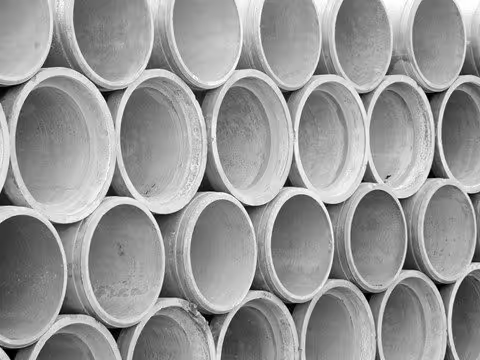
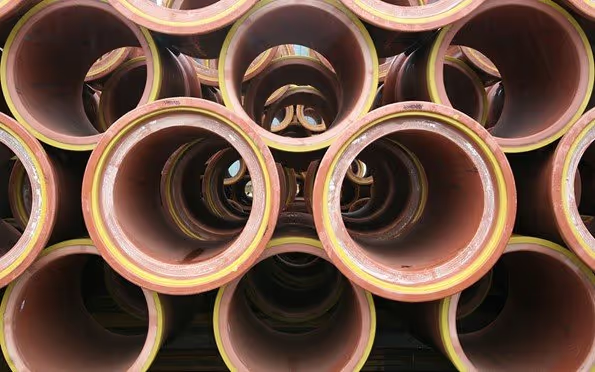
Different types of sewer pipe materials have varying useful life estimates. For example, clay pipes typically have a useful life of 60 years, and PVC and concrete pipes have a useful life of 100 years. Common Sewer Pipe Materials Estimated Useful Life Vitrified Clay 60 years ( ref: https://www.mdpi.com/2075-5309/13/4/952/pdf ) PVC 100 years (ref: https://www.uni-bell.org/Portals/0/E-NEWS/MediaFiles/pvc-pipe-longevity-report.pdf ) Concrete 100 years (ref: https://www.mdpi.com/2075-5309/13/4/952/pdf )
What else impacts useful life of sewer pipes?
It should be noted that these are just estimates based on industry research and investigations. The actual useful life of sewer pipes can vary based on things like the quality of installation, the degree of maintenance, and the intensity of use, as well as local environmental and soil conditions.
How can you extend the useful life of a sewer pipe?
A recent example of when the useful life of sewer pipes came to an end was when a sewer pipe broke in North Carolina causing more than 4 million gallons of untreated wastewater to spill into a creek. Whilst the cause of the break is still under investigation, it’s likely a case of the pipe reaching the end of its useful life before a maintenance or renewal program could escalate it for further works.Regular inspection and maintenance of sewer pipes can help extend their useful life and prevent premature failure. The frequency maintenance and renewal regularity should be dependent on each asset owners' budgets and needs. Although the Water Environment Federation (WEF) recommends that sewer pipes be inspected at least once every five years, for many cities and water utilities, this is not practical. When an inspection is carried out, the areas of the catchment that are at coming to the end of its useful life should be prioritised.
Articles
.jpg)