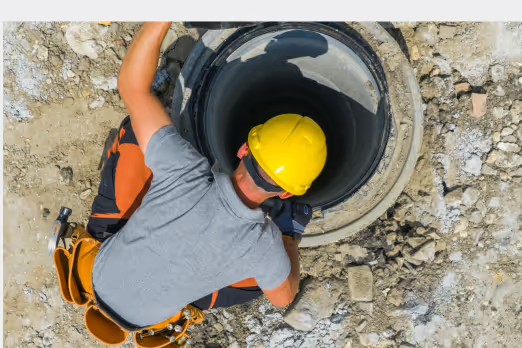


Manholes are a vital part of urban infrastructure, serving as crucial access points to underground utilities like sewer and stormwater systems. They facilitate regular inspections, maintenance, and emergency repairs, ensuring these systems function smoothly. Beyond their operational role, well-designed and constructed manholes enhance the overall reliability and efficiency of urban utility networks.
This blog serves as a beginner's guide to understanding the fundamentals of manhole design and construction. The topic aligns with our focus on infrastructure management and highlights the importance of reliable systems that support urban utilities. By exploring the purpose of manholes, key design considerations, construction best practices, and common challenges, this guide provides a foundational understanding for those new to the subject.
Understanding the Purpose of Manholes
Manholes are essential components of underground sewer, drainage, and utility networks, providing access for maintenance, inspections, and repairs. Their design must accommodate specific functions, such as ensuring worker safety during access, allowing proper flow of water or waste through connected pipes, and providing ventilation for sewer gases. Additionally, manholes serve as junctions for multiple pipelines, making their structural integrity and functionality crucial for overall system performance.
Key Considerations in Manhole Design
Effective manhole design begins with an understanding of site-specific requirements. Key considerations include:
- Load-Bearing Capacity: Manholes must withstand static and dynamic loads from traffic or soil above.
- Material Selection: Common materials include concrete, fiberglass, and precast polymer. Each material has unique advantages in terms of durability, cost, and environmental resistance.
- Dimensions and Accessibility: Manholes should be sized to allow safe and convenient worker access, with standardized diameters and step placements.
- Hydraulic Performance: The design must account for the flow rates, ensuring minimal disruption to the fluid dynamics of connected pipes.
- Environmental Factors: Consider local weather conditions, groundwater levels, and soil characteristics when determining design specifications.
Construction Best Practices
The success of manhole construction hinges on strict adherence to industry standards and best practices, ensuring durability and operational efficiency. Key steps in the process include proper excavation and site preparation to stabilize soil and support the manhole structure. Once the site is ready, a robust foundation—typically made of reinforced concrete—is installed to prevent settling and structural failures. Sealing all joints and connections between pipes and manholes is essential to avoid leaks and groundwater infiltration. During construction, safety measures such as temporary shoring, protective barriers, and safe entry protocols must be enforced to protect workers. Finally, thorough inspections and testing ensure that the manhole meets design specifications and resolves potential issues before it becomes operational.
A prime example of best practices in manhole construction can be seen in the Werribee North Outlet Sewer project in Truganina, Victoria. This project involved the installation of approximately 2 km of DN1000 and DN1200 GRP gravity sewer, along with 10 pre-cast GRP manholes. The construction faced challenges such as a narrow corridor bounded by a creek and conservation zone, significant environmental aspects, and multiple stakeholders and landowners. Despite these challenges, the project was completed successfully, demonstrating the importance of adhering to best practices in manhole construction. This case study highlights the critical role of meticulous planning, environmental consideration, and stakeholder management in successful manhole construction projects.
Common Challenges and How to Overcome Them
Manhole projects often encounter challenges that can affect timelines and costs. Here are some common issues and mitigation strategies:
- Groundwater Intrusion: Use watertight seals and consider dewatering techniques during construction.
- Soil Instability: Employ geotechnical evaluations and soil reinforcement methods.
- Corrosion and Erosion: Select materials resistant to the local environment and apply protective coatings when necessary.
- Access Limitations: Use modular or segmented designs for installation in tight spaces or areas with limited access.
By proactively addressing these challenges, you can reduce delays and ensure a durable, functional product.
A notable example of effective manhole design is the Nagari Road Trunk Sewer Upgrade in Woy Woy, Australia. In this project, custom Glass Reinforced Plastic (GRP) manholes were designed to suit a new DN1100 GRP gravity sewer main. The solution included DN1500 GRP access risers with fully benched and deflected chambers, access platforms, and anti-buoyancy designs incorporated into the shafts. This innovative approach resulted in lightweight structures with integrated lifting points, reducing installation time and costs while enhancing the sewer system's durability and performance.
Conclusion: Building for Long-Term Success
Manhole design and construction require careful planning, precise execution, and adherence to best practices to ensure their longevity and effectiveness. By understanding the specific requirements of the site, selecting appropriate materials, and addressing potential challenges, engineers and contractors can deliver reliable infrastructure that supports the broader utility network.
Investing in quality design and construction is not just about meeting immediate project goals—it’s about securing the infrastructure’s resilience against wear and tear, environmental pressures, and future demands. Well-designed manholes reduce the need for frequent repairs, minimize the risk of system failures, and ensure safety for maintenance personnel. Whether building new systems or modernizing outdated ones, prioritizing high standards in manhole projects leads to more sustainable and cost-efficient urban infrastructure over time.
Articles
.jpg)