

What Are Lifting Holes / Lifting Lugs
Lifting holes, also known as lifting lugs, can be important components in the installation of stormwater pipes. Understanding their purpose, types, and associated issues is crucial for civil engineers in the USA, Australia, and the UK. This comprehensive guide will cover everything you need to know about lifting holes in stormwater pipes, including the types of pipes that have them, the different styles of lifting holes, sealing methods, common defects, and how various reporting codes address these features.
What Pipes Have Them
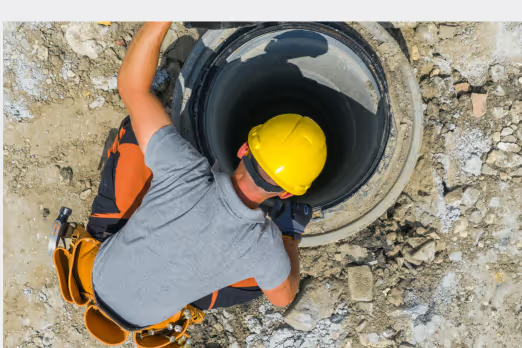
Lifting holes or lifting anchors are often used in larger diameter stormwater pipes to facilitate easier handling and installation. Lifting holes can be created during the manufacture process or added post-manufacture, providing secure points for attaching lifting equipment such as cranes or excavators. Large diameter concrete drainage pipes often weigh between 2,000 to 4,000lbs (1,000 to 2,000kg); the ability to safely lift, manoeuvre, and lower pipes into a trench is important for worker safety, efficiency of work, and avoiding damage to the pipe during installation.
Example: According to the Concrete Pipe Association of Australasia, lifting holes are important for safely handling and positioning concrete pipes during installation (source: Concrete Pipe Association of Australasia).


Different Types of Lifting Holes and Sealing Methods
Lifting holes are commonly found in large-diameter reinforced concrete pipes used in stormwater drainage networks. It is typical for pipe sizes above 20"/525mm in diameter to come with lifting holes as a standard option.
There are various types of lifting holes, including cast-in-place holes, drilled holes, and insert-type lifting points. Each type has its own method of sealing after the pipe is installed:
- Cast-in-place holes: These are pre-formed during the pipe manufacturing process and are often sealed with rubber grommets or concrete plugs.
- Drilled holes: Added after the pipe is cast, typically sealed with rubber stoppers or epoxy.
- Insert-type lifting points: Incorporate metal or plastic inserts that remain in the pipe, sealed with screw caps or specialized plugs.
- Bashed holes: Added to the pipe on site in using tools available. These are seen in older pipe installations and commonly associate with various defects over time.
It is recommended that sealing is completed using fit-for-purposes components - the examples below are of bashed in lifting holes and unsuitable seals.

Example: The UK-based Concrete Pipe Association offers a detailed guide on different sealing methods for lifting holes to ensure water tightness and structural integrity (source: CPA UK).
Defects Associated with Lifting Holes
Lifting holes can introduce several defects if not properly managed, including:
- Leakage: Improperly sealed lifting holes can allow water infiltration/bedding.
- Roots: Tree roots will use holes in pipes as an entry point which can then lead to impediment of flow.
- Structural Weakness: Incorrect placement or sealing of lifting holes can compromise the structural integrity of the pipe. This is often develops as a circumfrential crack that widens over time.
- Corrosion: Poorly manufactured holes often result in unnecessary concrete spalling and exposure of steel reinforcement that can corrode over time, especially in aggressive environments.

How Different Reporting Codes Handle These Features
Different countries may have varying standards and codes for reporting and handling lifting holes in stormwater pipes. The WSA-05 Conduit Inspection Reporting Code of Australia separates lifting holes into manufactured vs. bashed, and sealed vs. unsealed with varying defect scores for each category.
By understanding the role of lifting holes in stormwater pipes, civil engineers can better manage their installation and maintenance, ensuring structural integrity and long-term performance. This guide serves as a valuable resource for industry professionals looking to deepen their knowledge and apply best practices in their projects.
Articles
.jpg)