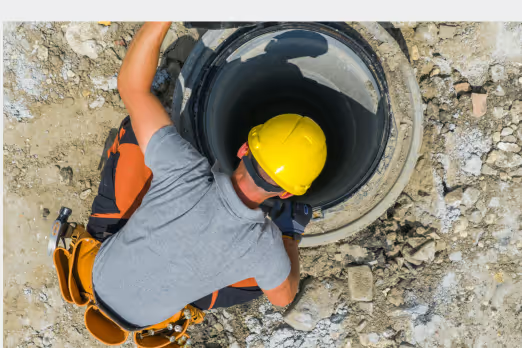

The sewer industry plays a critical role in modern infrastructure, but it’s no stranger to challenges. From aging pipes to resource limitations and increasing environmental pressures, managing sewer systems effectively has always been a demanding task. However, the advent of digital technology is revolutionizing this sector, offering innovative solutions to tackle these age-old problems. Here’s how IT is reshaping the sewer industry and addressing its most pressing challenges.
The Challenges Facing the Sewer Industry
Sewer systems, often hidden underground and out of sight, face several ongoing challenges:
- Aging Infrastructure: Many sewer systems around the world are decades, if not centuries, old, leading to frequent failures and costly repairs.
- Access Challenges: Access to this underground infrastructure can be complicated, particularly if mapping of the network is inaccurate.
- Labor-Intensive Processes: Traditional methods of inspection and maintenance are time-consuming and require significant manual effort.
- Data Limitations: Decision-making is often based on outdated or incomplete information, resulting in inefficient resource allocation.
- Environmental Compliance: Increasing regulations demand better monitoring and management to prevent pollution and ensure sustainability.
These challenges underscore the need for modern tools to optimize operations and decision-making. That’s where IT comes in.
A case study of Northumbrian Water, a leading UK water utility serving over 2.7 million customers, faced challenges typical of the sewer industry, including aging infrastructure, labor-intensive inspection processes, data limitations, and stringent environmental compliance requirements. To address these issues, they partnered with VAPAR to integrate an AI-powered platform into their sewer inspection workflow. By uploading CCTV inspection footage to VAPAR's platform, Northumbrian Water automated the defect detection process, significantly reducing the time required for footage analysis. This automation not only expedited the identification of critical defects but also standardized condition assessments, leading to more consistent and informed decision-making. As a result, Northumbrian Water improved its blockage and sewer flooding performance, demonstrating how digital technology can effectively tackle longstanding challenges in sewer system management.
How Digital Technology is Transforming Sewer Management
The integration of IT into sewer management has paved the way for unprecedented advancements. Key technologies include:
- Internet of Things (IoT): IoT sensors enable real-time monitoring of sewer conditions, detecting anomalies like blockages or overflows before they escalate.
- Artificial Intelligence (AI): AI-powered platforms analyze vast amounts of data, providing insights for predictive maintenance and efficient resource use.
- GIS Mapping: Geographic Information Systems (GIS) provide detailed visualizations of sewer networks, aiding in asset tracking and planning.
- Automation: From robotic inspections to automated condition assessments using AI, manual processes are being streamlined, saving time and reducing errors.
These tools empower operators to act proactively rather than reactively, addressing issues before they become crises.
A good sample for this is Severn Trent Water, one of the UK's largest water and sewerage providers, partnered with StormHarvester in 2023 to implement an AI-driven solution for proactive sewer management. By integrating data from 393 monitoring sites with hyper-local rainfall information, advanced machine learning models were able to predict blockages and overflows, enabling pre-emptive maintenance actions. Over a five-month trial, the system prevented 11 pollution incidents, facilitated remedial actions at 93 sites, and resolved 46 partial blockages before they escalated. With a 100% success rate in detecting potential pollution events, the project proved the transformative potential of AI in improving operational efficiency, reducing environmental impact, and ensuring system reliability. Following the trial’s success, Severn Trent began scaling the solution across its entire network.
Real-World Applications and Success Stories
Digital technology is already making a tangible impact in the sewer industry:
- Predictive Maintenance: Municipalities using AI-driven systems have reduced unplanned downtime by predicting pipe failures with remarkable accuracy.
- Automated CCTV Analysis: AI tools analyze inspection footage faster and more consistently than human operators, enabling quicker identification of defects.
- Real-Time Overflow Monitoring: IoT-enabled systems alert operators of potential overflows, minimizing environmental damage and regulatory penalties.
- Optimized Budget Allocation: Data-driven platforms help prioritize investments in the most critical areas, maximizing the impact of limited budgets.
These success stories highlight the potential of IT to drive cost savings, efficiency, and environmental protection.
Overcoming Barriers to Adoption
While the benefits of digital technology are clear, adoption isn’t without challenges:
- Cost Concerns: Initial investments in IT solutions can be daunting for municipalities and utility providers.
- Skill Gaps: Workforce training is needed to ensure operators can leverage these advanced tools effectively.
- Legacy Systems: Integrating new technologies with existing infrastructure can be complex.
Addressing these barriers requires collaboration between technology providers, governments, and industry stakeholders. Grants, training programs, and phased implementation plans can help overcome resistance and accelerate adoption.
Conclusion: A Smarter Future for Sewer Management
The integration of IT into the sewer industry marks a new era of efficiency and sustainability. By addressing key challenges with innovative tools, operators can improve infrastructure longevity, reduce costs, and enhance environmental outcomes. While there are hurdles to overcome, the benefits far outweigh the challenges, making digital transformation an essential step for the industry’s future.
The sewer industry’s shift to digital technology isn’t just about adopting the latest gadgets; it’s about creating smarter, more resilient systems that serve communities better. The time to embrace this change is now.
Articles
.jpg)