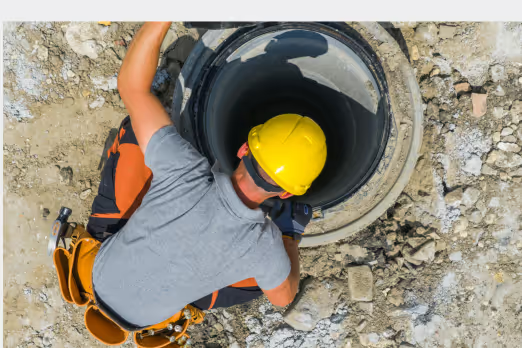



The demands on sewer and stormwater networks are intensifying due to factors such as population growth, increased weather events, and greater overall usage. As council engineers look toward the future, it’s imperative to adopt strategies that ensure these critical infrastructure systems remain resilient and efficient. This article outlines key steps for future-proofing sewer and stormwater asset networks, addressing current challenges and exploring potential innovative solutions.
Understanding the Challenges
- Population Growth: Many urban areas are experiencing brownfield development and rapid population growth, leading to increased demand on existing sewer and stormwater systems. This growth can strain the capacity of these networks, causing overflows and system failures.
- Increased Weather Events: Climate change is contributing to more frequent and severe weather events, including heavy rainfall and flooding. These conditions challenge the capacity and durability of existing systems, often leading to surcharge conditions and infrastructure damage.
- Aging Infrastructure: Much of the current sewer and stormwater infrastructure is aging and was not designed to handle modern demands. Upgrading or replacing these systems is a significant challenge due to financial constraints and the complexity of urban environments.
- Greater Demand on Water Asset Systems: With increasing urbanization, the demand for water supply and waste disposal is rising. This places additional pressure on water asset systems, necessitating more efficient and robust solutions.
Key Steps for Future-proofing
- Comprehensive Assessment and Planning
- Conduct thorough assessments of existing infrastructure to identify vulnerabilities and capacity issues.
- Develop long-term strategic plans that incorporate population growth projections and climate change scenarios.
- Implement asset management systems to monitor and maintain infrastructure health, prioritizing critical upgrades and repairs.
- Adopting Green Infrastructure Solutions
- Integrate green infrastructure, such as rain gardens, green roofs, and permeable pavements, to manage stormwater at the source and reduce runoff.
- Promote the use of natural landscapes to enhance groundwater recharge and reduce the burden on sewer systems.
- Implement bioswales and constructed wetlands to treat and manage stormwater naturally, reducing reliance on traditional pipe networks.
- Enhancing System Capacity and Resilience
- Upgrade existing pipelines and treatment facilities to increase capacity and improve resilience against extreme weather events.
- Use advanced materials and construction techniques that offer greater durability and resistance to corrosion and blockages.
- Implement redundancy in critical system components to ensure continuous operation during failures or maintenance.
- Leveraging Technology and Data Analytics
- Deploy smart sensors and IoT devices to monitor system performance in real-time, detecting issues such as leaks, blockages, and overflows.
- Utilise data analytics and predictive modelling to anticipate system stress points and plan proactive maintenance.
- Integrate geographic information systems (GIS) for detailed mapping and analysis of infrastructure networks, aiding in strategic planning and emergency response.
- Promoting Water Conservation and Reuse
- Implement policies and programs that encourage water conservation, reducing the overall load on sewer systems.
- Develop and promote greywater and stormwater reuse systems for non-potable applications, such as irrigation and industrial processes.
- Educate the public on the importance of sustainable water use and the role they play in maintaining infrastructure health.
- Collaboration and Community Engagement
- Foster collaboration between municipalities, utility providers, and stakeholders to share knowledge, resources, and best practices.
- Engage with the community to build awareness and support for infrastructure projects, ensuring transparency and public involvement.
- Seek funding opportunities and partnerships with private sector entities to finance and implement innovative solutions.
Innovative Solutions for the Future
- Smart Sewer Systems: These systems incorporate sensors, automated controls, and data analytics to optimize operations, detect issues early, and improve overall efficiency.
- Decentralized Treatment Systems: Small-scale, localized treatment facilities can reduce the burden on central treatment plants and provide more flexible solutions for expanding urban areas.
- Adaptive Infrastructure: Designing infrastructure that can adapt to changing conditions, such as modular systems that can be easily expanded or modified, ensures long-term resilience and flexibility.
- Flood-Resilient Designs: Implementing flood-resilient designs, such as elevated infrastructure and flood barriers, can protect critical assets from damage during extreme weather events.
Conclusion
Future-proofing sewer and stormwater asset networks requires a multifaceted approach that addresses current challenges and anticipates future demands. By adopting comprehensive assessment and planning strategies, integrating green infrastructure, enhancing system capacity, leveraging technology, promoting water conservation, and fostering collaboration, council engineers can ensure the resilience and efficiency of these critical infrastructure systems for years to come. Innovative solutions and proactive measures will be key to managing the growing pressures on these networks and safeguarding public health and safety.
Articles
.jpg)