
The world of asset inspection is experiencing a major shift. What used to be slow, labour-intensive work is now faster, safer, and smarter, thanks to technological advancements. Tools like drones, AI, and cloud-based software are streamlining inspections and helping organisations make better decisions.
Whether it’s inspecting sewer or stormwater systems, bridges, railways, or dams, the way we approach condition assessment is evolving—and the benefits are clear. In this article we’ll explore how technology is shaping the future of asset inspections and what it means for industry professionals.
The Traditional Challenges of Asset Inspections
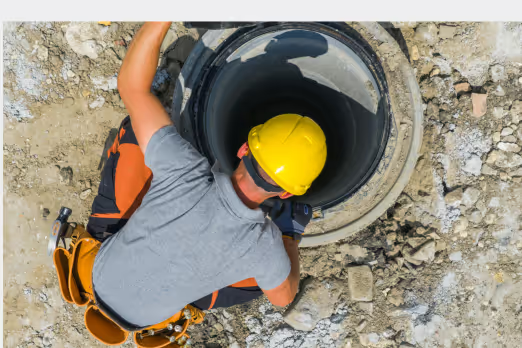
Before modern tools entered the picture, asset inspections were often difficult, dangerous, and inefficient. Inspectors had to manually access confined spaces, climb structures, or enter hazardous environments. These methods came with a high risk to health and safety, not to mention significant cost and time investment.
Additionally, traditional inspections relied heavily on human judgement and experience levels, resulting in inconsistencies in defect identification and reporting between individuals. It also meant that inspection data could be subjective, making it harder to compare results over time or between sites. The lack of automation led to longer delays in turning inspection data into actionable insights.
Another major limitation was the reactive nature of traditional maintenance. Problems were only addressed after failure had occurred, leading to costly emergency repairs and unexpected downtime. Clearly, there was room for improvement—and that’s where new technology has played a critical role.
Drones: A New Perspective from Above
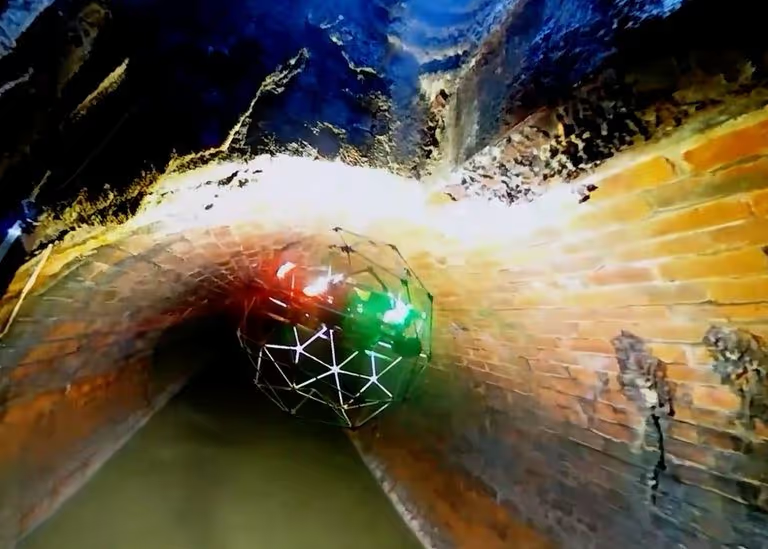
Drones, or Unmanned Aerial Vehicles (UAVs), have quickly become a game-changer in asset inspections. They provide a bird’s-eye view of infrastructure, capturing high-resolution images and videos in areas that would otherwise be difficult, dangerous, or impossible to access.
For example, drones can fly over large water reservoirs, scan the exterior of tall buildings, or inspect roof structures without the need for scaffolding. This reduces inspection time, improves safety, and saves money. In industries like construction, energy, and transportation, drones are now a standard part of the toolkit.
Many modern drones are also equipped with thermal imaging, LiDAR, and GPS technology. These sensors enable detailed and accurate assessments that go far beyond what a human inspector can achieve on their own. Furthermore, drone data can be uploaded instantly, allowing teams to start analysis without delay.
Ultimately, drones allow asset owners to gather more data, more frequently, and with less disruption to operations.
The Rise of AI and Predictive Analytics
Artificial Intelligence (AI) is the driving force behind the next generation of asset inspection tools. When paired with video footage or statistical monitoring data, AI algorithms can automatically identify cracks, corrosion, leaks, and other signs of deterioration. This not only saves time but also improves accuracy.
Rather than relying on manual reviews of thousands of data points or videos, AI systems process data quickly and highlight only the portions of the data that contain relevant information. This helps inspectors focus their efforts where it matters most. It also reduces the chance of human error or oversight.
Beyond defect detection, predictive analytics takes things one step further. By analysing historical data and trends, AI can also be used to forecast future failures before they happen. This enables asset managers to take preventive action, reducing the risk of unexpected breakdowns and improving overall system reliability.
In sewer and stormwater management, for instance, AI tools can predict where blockages are likely to occur based on previous inspection results and usage patterns. This shift to proactive maintenance can significantly lower long-term repair costs.
Combining Technologies for End-to-End Efficiency
The true power of technology lies in integration. Drones, AI, and cloud platforms each bring value, but when combined into a single workflow, they create a fully connected inspection ecosystem. This end-to-end approach is redefining how organisations manage their assets.
For example, drone-collected imagery can be uploaded to a cloud platform where AI analyses the footage and automatically generates condition reports. These reports can then be shared in real time with engineers, decision-makers, or contractors—no need to wait days or weeks for manual processing.
Cloud-based dashboards may also allow stakeholders to track inspection schedules, monitor defect trends, and prioritise repairs across an entire asset portfolio. Real-time collaboration tools ensure that everyone stays informed and aligned, regardless of location.
By combining multiple technologies, organisations can achieve greater consistency, reduce administrative overhead, and make data-driven decisions with confidence.
The Future of Inspection Jobs: Human + Machine
As technology continues to evolve, the role of human inspectors is changing—not disappearing. Instead of climbing ladders or crawling through tunnels, inspectors are now working with data, interpreting results, and making strategic decisions based on digital tools.
This shift opens up new career opportunities. Inspectors are becoming drone pilots, data analysts, software users, and asset managers. The human touch is still essential, especially when it comes to critical thinking, problem-solving, and applying contextual knowledge.
To keep up with this transformation, ongoing training and upskilling will be key. Professionals will need to learn how to use inspection platforms, understand AI-generated insights, and work collaboratively with other tech-enabled teams.
Far from making inspection jobs obsolete, technology is empowering a new generation of workers with the tools they need to be more effective, efficient, and safe.
Conclusion
From drones in the sky to AI in the cloud, the future of asset inspection is already here. These tools are reshaping how we work—making inspections faster, safer, and more accurate than ever before. For organisations responsible for critical infrastructure, embracing this shift isn’t just an option—it’s a necessity.
By leveraging the best of both technology and human expertise, the asset inspection industry is well-positioned to meet the challenges of tomorrow.
Articles
.jpg)