
How Ballina Shire Council Improved Wastewater Resilience Against Sea Water Infiltration
- Inspection of 10 kms of pipeline
- Identified 3,950+ pipe features
- 396 instances of infiltration found

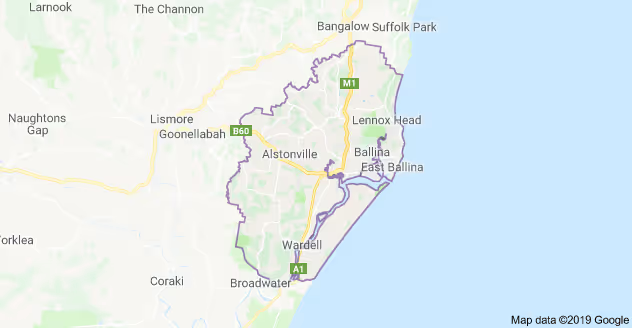
Ballina Shire Council, located on the northern coast of New South Wales, manages a network of four wastewater treatment plants servicing around 14,000 homes and processing 3,000 megaliters of wastewater annually. Due to its coastal location, the Council faces significant challenges from sea water infiltration caused by high tides, rising sea levels due to a large proportion of land lying below sea level. This infiltration increases salinity levels within the wastewater system, disrupting treatment processes, accelerating corrosion of infrastructure, and leading to higher maintenance costs.
Project Snapshot
Ballina Shire Council has significantly improved their program to tackle the challenge of sea water infiltration within its wastewater treatment system by implementing the VAPAR platform. Through AI-driven inspections and detailed defect analysis, the Council identified critical areas of ingress, enabling targeted relining works and enhancing the resilience of its wastewater network. The integration of cloud-based data facilitated collaborative planning and proactive asset management, ensuring effective long-term solutions against sea water infiltration.
The main challenge is the persistent storm & sea water infiltration into the wastewater system waste, which compromises treatment efficiency and causes severe corrosion in pipeline assets. Traditional inspection methods have been inadequate for accurately identifying the sources and extent of infiltration, making it difficult for the Council to effectively plan maintenance and rehabilitation efforts.
To address this issue, Ballina Shire Council partnered with VAPAR, utilizing AI-powered video analysis to inspect over 10 kilometers of pipeline. The platform’s advanced technology enabled rapid identification of pipe defects and infiltration points, with findings cataloged in cloud-based software for streamlined access and collaborative planning. This approach provided actionable insights, allowing the Council to prioritize relining works and integrate the data into its broader asset management strategy, enhancing the resilience of its wastewater infrastructure against sea water infiltration.
About the client
Ballina Shire Council is situated in the picturesque Northern Rivers region of the Far North Coast of New South Wales, Australia. Spanning an area of 485 square kilometers, this vibrant local government area is home to a diverse and growing community. According to the 2021 Census, the shire boasts a population of approximately 47,279 residents, making it a dynamic mix of coastal and hinterland lifestyles. With a current population density of around 97.36 persons per square kilometer, the region balances its urban hubs with expansive natural landscapes, offering a unique blend of community-oriented living and environmental sustainability.
The Challenge & Opportunity
Ballina Shire Council operates four local wastewater treatment plants that handle approximately 3,000 megaliters of wastewater annually from around 14,000 homes. The treated water is released into surrounding land and sea catchments under strict environmental regulations. To enhance the sustainability of water management, the Council has invested $85 million to upgrade these facilities, enabling the supply of recycled water to 7,200 homes through a dual reticulation system.
However, the wastewater treatment process faces significant challenges from sea water infiltration, particularly during flooding events and periods of high sea levels. This ingress of saltwater into the wastewater system increases salinity levels, which diminishes the effectiveness of the treatment process. Furthermore, sea water infiltration (SWI) contributes to hydrogen sulfide (H₂S) formation, accelerating corrosion within pipe networks and other infrastructure, leading to costly maintenance and repairs.
SWI poses a critical issue for coastal wastewater treatment plants, as the higher salinity not only disrupts biological treatment processes but also promotes the formation of sulfuric acid, which aggressively corrodes concrete and metal components in the pipe network. This corrosion compromises the structural integrity of the assets, leading to frequent failures and increased maintenance costs.
Identifying the sources and extent of SWI is crucial to maintaining the operational efficiency of wastewater treatment plants. One method currently used is conductivity analysis, which helps detect changes in salinity levels within the system. However, accurate evaluation of infiltration points and the condition of pipes often requires further inspections and detailed reporting on infiltration and inflow (I&I), particularly at junctions where leaks commonly occur. This data is essential for determining which assets require repair or replacement to mitigate the impacts of SWI effectively.
Overall, addressing sea water infiltration within Ballina Shire Council’s wastewater treatment network is essential for safeguarding infrastructure and ensuring the continued supply of high-quality recycled water to the community.
The Solution
To address the challenges of sea water infiltration and infrastructure deterioration, Ballina Shire Council adopted the VAPAR platform, a technology-driven solution for efficient pipe inspection and reporting. By leveraging this platform, the Council was able to inspect and upload over 10 kilometers of combined backlog and proactive inspection footage for analysis.
In a collaborative effort, Ballina’s wastewater engineering team worked closely with VAPAR’s engineers to review and assess approximately 100 inspections. VAPAR’s advanced AI processing translated the video footage into a series of reportable images, streamlining the review process and enhancing the accuracy of defect identification.
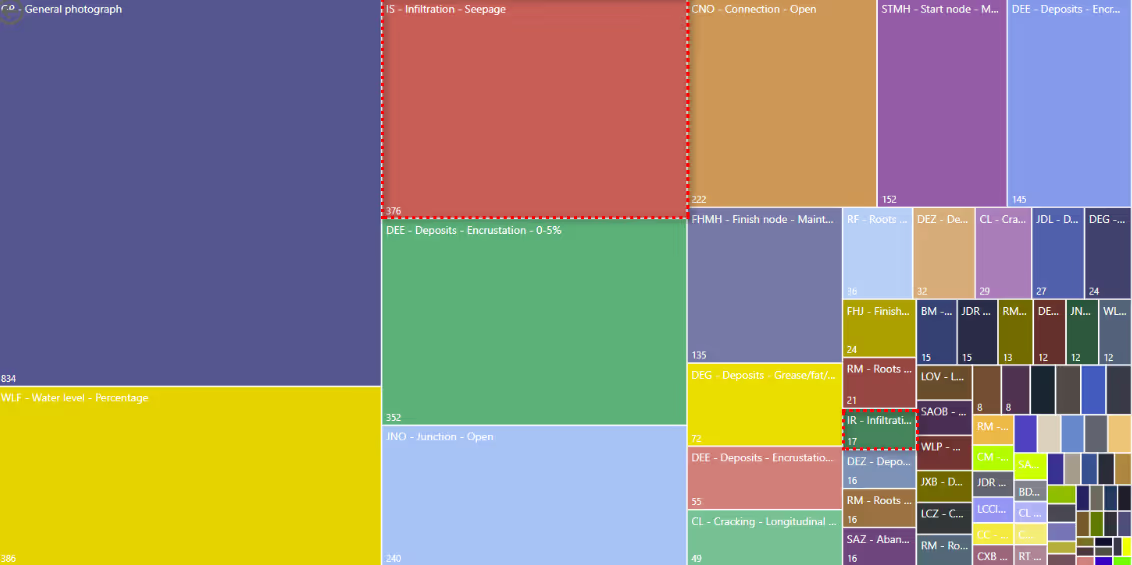
Through this approach, the engineers were able to detect and document over 3,596 pipe defects and features, categorizing them into comprehensive, industry-standard reports. These detailed
reports provided critical insights into areas requiring infiltration management and targeted relining work, enabling the Council to prioritize and plan relining works against 1.4Km of wastewater assets.
Results
The inspection of 10 kilometres of pipeline using the VAPAR platform identified over 3,950 pipe features, with findings detailed through VAPAR’s cloud-hosted software and catalogued in PDF reports. The analysis highlighted more than 1.4 kilometres of wastewater assets affected by 396 instances of infiltration, which are now undergoing targeted relining works.
Ballina Shire Council’s asset and project engineers are now utilizing VAPAR’s cloud storage system for collaborative rehabilitation planning. This system provides seamless online access to inspection videos and detailed reports, streamlining communication and project delivery for both internal teams and external stakeholders. The integration of this data into the Council’s broader asset management systems enhances decision-making and supports effective long-term infrastructure management.
"Making use of VAPAR to catalogue and process our CCTV footage has given us great consistency in our assessment process & data management. VAPAR has also enabled us to make better use of our resources and has proved critical for informing our rehabilitation plan for over the last 12 months. We are excited to continue working with VAPAR over the next 12 months to further improve our processes” Michael Rogers - Network Operations Engineer
Conclusion
Ballina Shire Council's effective response to the challenge of sea water infiltration in its wastewater treatment system demonstrates the power of leveraging advanced technology for infrastructure management. By implementing the VAPAR platform, the Council has significantly enhanced its capacity to identify, assess, and address the impacts of ingress & infiltration, ensuring the continued efficiency of its wastewater treatment plants.
- The use of VAPAR’s AI-powered inspection platform enabled the Council to pinpoint over 3,950 pipe defects, including 396 instances of infiltration across more than 1.4 kilometers of wastewater assets. This precise identification allows for targeted interventions, such as relining works, to directly combat the effects of sea water infiltration, minimizing damage and improving treatment efficacy.
- The detailed, data-driven reports generated by VAPAR’s platform empower Ballina Shire Council to make informed decisions about asset maintenance and rehabilitation. By focusing on areas most affected by sea water infiltration, the Council can strategically allocate resources to reinforce vulnerable sections, ultimately enhancing the overall resilience of the wastewater network.
- VAPAR’s cloud-based system facilitates seamless access to inspection data and reports, enabling collaborative planning among asset managers, engineers, and stakeholders. This streamlined approach not only accelerates the response to infiltration issues but also integrates vital data into the Council’s broader asset management framework, supporting proactive and ongoing efforts to mitigate storm & sea water ingress.
How Vapar is used in other councils
.jpg)
.jpg)

Trusted by councils & engineering teams around the world

“VAPAR has helped us understand the complexity of using AI for CCTV review, and we are now better positioned to start implementing this technology to improve data quality and asset management processes.”
“As this is a true digital solution we were able to complete the first trial despite the current pandemic through true global collaboration. We have had some extremely promising results from the initial work and look forward with the potential expand the trials.”

“VAPAR provides accurate and effective condition rating to council’s stormwater CCTV video, allowing for significant cost and time savings.”
“We’ve discovered so many improvements and efficiencies using VAPAR as opposed to keeping the status quo. We are really setting ourselves up for success well into the future.”
"The work Trility carried out for CCTV inspection assessments / analysis would usually take months to complete. With the implementation of Vapar, the same task took just weeks.”
United Utilities is always on the lookout for ways we can provide world-class services to our customers. We are interested in partnering with companies like Vapar, who stand out because of their agility, technical skill and willingness to work collaboratively.