
How Bayside Council use data-driven Insights to improve stormwater risk management
- 500+ inspections completed
- 0.5 km of network coverage
- 12,500+ features and defects identified
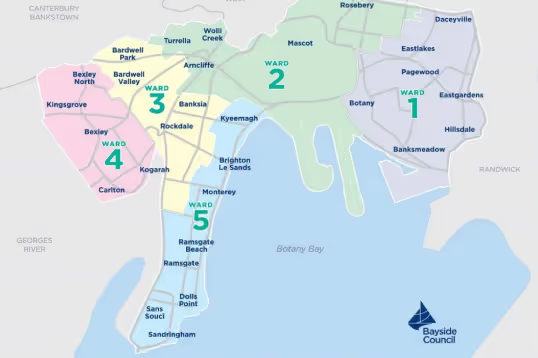
Bayside Council used VAPAR’s AI-powered platform to modernise its stormwater asset management workflows. By digitising inspections and leveraging defect analytics, the council improved risk visibility, prioritised high-impact renewals, and aligned with its 10-year resilience strategy.
The Council is located in the heart of Sydney, manages over 15,000 stormwater assets valued at approximately $234 million. With increasing population density, climate-driven rainfall events, and an ageing asset base, the council faces significant challenges in ensuring its stormwater network remains resilient and capable of protecting the community.
To manage these challenges, Bayside Council adopted a forward-looking Stormwater Asset Management Plan (2025–2035). Central to this plan is the commitment to evidence-based decision-making, climate adaptation, and efficient use of resources. To support these goals, the council partnered with VAPAR, using the platform to streamline stormwater inspections and enhance visibility of network condition and risks.
VAPAR worked closely with the Infrastructure team to onboard inspectors, validate AI results, and integrate outputs into existing renewal models.
Project Snapshot
Through the adoption of the VAPAR platform, Bayside Council enhanced its ability to monitor, assess, and plan for stormwater risks.
- 500+ inspections completed
- 10.5 km of network coverage
- 12,500+ features and defects identified
- Supporting the council’s 10-year renewal plan and risk-based asset prioritisation
About the Client
Bayside Council spans 29 suburbs and is home to over 183,000 residents, with population growth projected to reach 213,000 by 2036. The area includes vital infrastructure such as Sydney Airport and Port Botany, as well as coastal and urban environments that are increasingly exposed to flooding.
Managing a diverse and high-value drainage network—comprising over 8,900 stormwater pipes, 5,800 pits, and numerous treatment assets—Bayside Council’s Infrastructure team is committed to proactive maintenance and long-term renewal planning that aligns with its Community Strategic Plan and Resilience 2032 Framework.
The Challenge / Opportunity
With more frequent and severe rainfall events, Bayside’s stormwater network is under increasing pressure to manage runoff and reduce flood risk. Traditional inspection and reporting methods were time-intensive and limited visibility of network-wide condition data.
The council required a smarter, scalable solution to:
- Centralise stormwater asset inspection data,
- Identify high-risk defects across its 10.5 km network,
- Integrate condition insights into long-term renewal planning, and
- Support its Risk Management Plan, ensuring compliance with ISO31000:2018 and climate adaptation strategies.
The Solution
By implementing the VAPAR platform, Bayside Council’s City Infrastructure team digitised its CCTV inspection workflows, enabling rapid upload, AI-assisted defect detection, and consistent grading aligned with IPWEA standards.
The solution allowed the team to:
- Review inspection footage in one platform with automated defect tagging
- Generate condition grades (1–5) and structural scores to prioritise renewals
- Link defect data directly to the Stormwater Asset Register, and
- Report actionable insights for planned maintenance and rehabilitation
This streamlined process replaced manual review tasks, reducing turnaround time from inspection to decision-making, while improving accuracy and repeatability across the network.
Results
Using VAPAR’s data-driven platform, Bayside Council achieved a step-change in how it manages stormwater risks:
- 12,500+ features and defects identified across 10.5 km of network
- 500+ CCTV inspections processed and reviewed
- Improved prioritisation of assets requiring renewal or intervention
- Data directly supports the 10-year funding plan for renewal and upgrades
- Enhanced risk visibility aligned with climate adaptation and resilience goals
The insights gained from VAPAR’s analytics are now informing Bayside’s long-term stormwater renewal strategy, ensuring that funding is directed to high-risk, high-impact areas.

Conclusion
Bayside Council’s adoption of the VAPAR platform marks a major step forward in its transition to proactive, technology-enabled asset management. By embedding AI-assisted defect identification and structured data analysis into its workflows, the council has enhanced its capacity to mitigate flood risks, manage lifecycle costs, and plan renewals with confidence.
As population and climate pressures grow, Bayside’s data-led approach will continue to strengthen its resilience and support a safe, sustainable environment for future generations.
How Vapar is used in other councils
.jpg)
.jpg)

Trusted by councils & engineering teams around the world

“VAPAR has helped us understand the complexity of using AI for CCTV review, and we are now better positioned to start implementing this technology to improve data quality and asset management processes.”

“As this is a true digital solution we were able to complete the first trial despite the current pandemic through true global collaboration. We have had some extremely promising results from the initial work and look forward with the potential expand the trials.”

“VAPAR provides accurate and effective condition rating to council’s stormwater CCTV video, allowing for significant cost and time savings.”

“We’ve discovered so many improvements and efficiencies using VAPAR as opposed to keeping the status quo. We are really setting ourselves up for success well into the future.”

"The work Trility carried out for CCTV inspection assessments / analysis would usually take months to complete. With the implementation of Vapar, the same task took just weeks.”

United Utilities is always on the lookout for ways we can provide world-class services to our customers. We are interested in partnering with companies like Vapar, who stand out because of their agility, technical skill and willingness to work collaboratively.