
Why is asset condition important?
One of the fundamental tasks of an asset manager is knowledge of asset condition. Whether this is buildings, bridges, plant, or pipes; collecting accurate information on the condition of the asset base is essential in understanding risk, developing budgets, and preparing asset maintenance and repair programs.For those that manage wastewater and stormwater pipe networks, there is an additional challenge with the assets requiring inspection usually being located underground.
What is the role of inspection software for sewer and stormwater pipes?
With cities and utilities managing vast pipe networks, there is a necessity for an efficient way to collect data and make decisions based on this information. The typical requirements of sewer inspection software are:
- Record defects and pipe features to inform pipe condition and details
- Apply consistent scoring of defects based on regional coding systems
- Provide a method to grade pipes to determine priority for maintenance and repair work that is required
- Generate informative reports to share inspection details with relevant stakeholders
- Deliver a structure for further data analysis, and information transfer to asset management software and geographical information systems
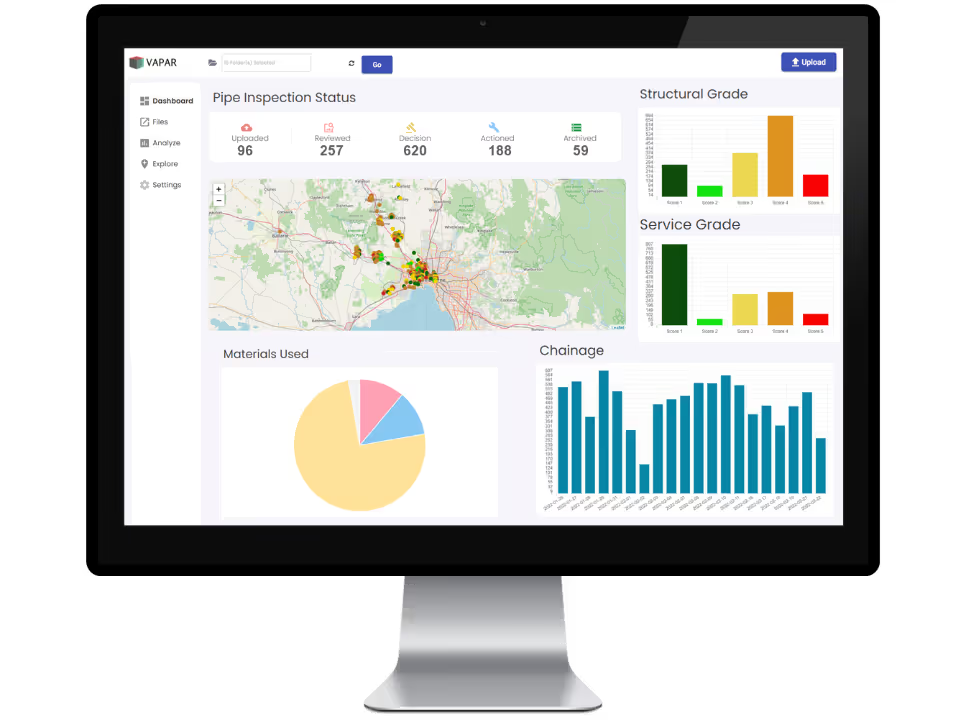
Figure 1 - Current generation of pipe inspection software
Regional differences between inspection codes
Different countries and regions around the globe have developed pipeline inspection codes in slightly different ways. The goal of each of these codes is typically the same; to provide a uniform standard for a region to apply a consistent approach to the inspection of pipes.Below is a list of some of the most common regions and codes that are used around the world.North AmericaCode: Pipeline Assessment & Certification Program (PACP) Reference ManualIssuer: National Association of Sewer Service Companies (NASSCO)United KingdomCode: Manual of Sewer Condition Classification (MSCC)Issuer: Water Research Centre (WRc)AustraliaCode: WSA 05 – 2020 Conduit Inspection Reporting Code of AustraliaIssuer: Water Services Association of Australia (WSAA)New ZealandCode: New Zealand Gravity Pipe Inspection ManualIssuer: Water New Zealand (with ProjectMax)European UnionCode: DIN EN 13508-2 Investigation and assessment of drain and sewer systems outside buildings - Part 2: Visual inspection coding systemIssuer: European Committee for Standardization (CEN)
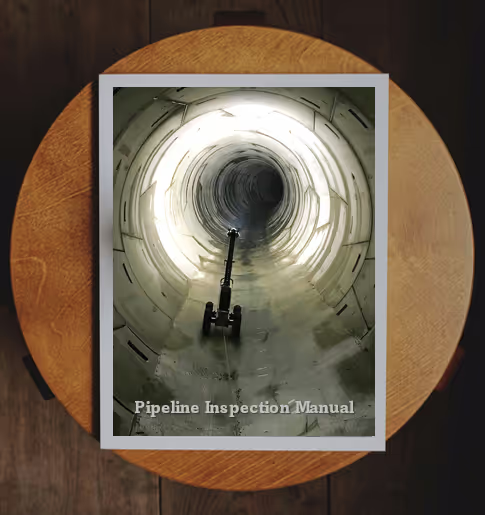
Figure 2- There is a variety of regional coding standards around the world
How recording inspections has changed over the decades
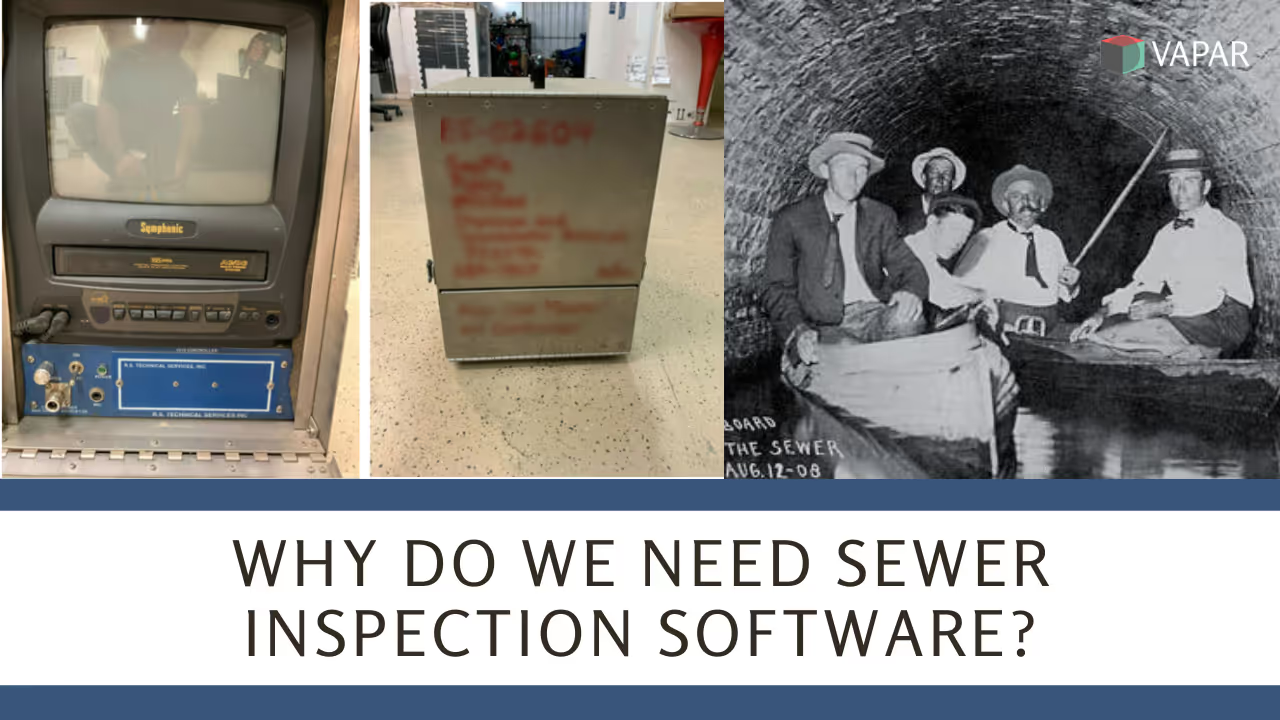
Clay sewer pipes were first constructed by the Mesopotamians over 6,000 years ago, with modern city sewer construction beginning in the 19th century. Before inspection crawler cameras and computers, these underground pipe networks still required periodic inspection. This was initially a visual inspection that was carried out either by walking or floating through the underground infrastructure.

Figure 3 - Pipe inspection by canoe (1908) Inspections gradually moved to photography and hand-written logs of defects. The 1950s saw the first development of remote camera deployment into underground pipes. As videography become an option in the 1970s/80s, the opportunity to capture condition information in a video format became accessible to utilities.Sewer inspection software evolved as computers became commonplace in businesses. Software provided numerous advantages over written/typed records. Errors reduced, consistency improved and access to information became easier.

Figure 4 - VHS capture of pipe condition informationVideo capture then evolved from VHS to digital media storage, and as data capture and storage advanced, inspection file size also grew. This presented fresh challenges for organisations as the transfer and storage of substantial amounts of data required careful management to ensure the condition information remained accessible to those who needed access to it. The current generation of sewer inspection software is using artificial intelligence to automatically identify defects and automate many of the tasks that are logic based and ideal for computer-assisted decisions. Data storage is increasingly moving into the cloud to provide fast and organised access to the growing amounts of collected data with ease.Pipe inspections still require operator controlled (or staged) capture of data in the field, and results processed through artificial intelligence models are combined with human quality assurance. There is excitement in the industry as the next generation of software is being advanced to further improve the tools available to asset managers.Watch this space!
Learn more about Sewer Network
VAPAR automates sewer and stormwater pipe condition assessment for councils, utilities and CCTV contractors. Learn how we help improve the monitoring and maintenance of the underground pipes using AI.Click Here
Articles
.jpg)